That's where we start. I work with teams in social services, non-profits and public administration on a real task from their working day, and we find out together where AI makes it easier and where it doesn't. With the tools you already have, no new software.
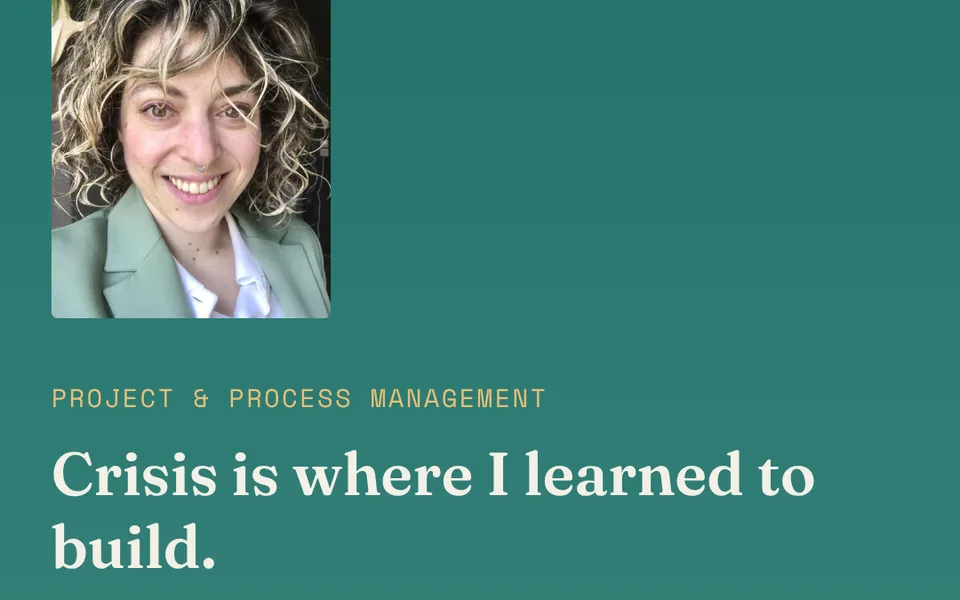
See the workshops →Coordinated and trained volunteers, mentored managers and teams, and ran workshops that got very different groups aligned.
Simplified documentation and reporting, and turned complicated procedures into ones people could actually follow.
Coordinated between public authorities and funding bodies, providers and leadership on the same projects.
Introduced and trained teams on digital systems, automated recurring workflows, and still can't resist building something new — this site included.
Everything I build, from AI agents to everyday tools and a game. What problem each one solves, and how.
See what I build →Which task eats up most of your time?
See the workshops →Hiring, collaborating, or just curious? Drop me a line.
Bachelor's in Sociology (Panteion University), alongside a diploma in acting and a teaching qualification for theatre.
Master's in Criminology & Criminal Justice, City St George's, University of London.
Ran a hands-on workshop for teenagers who had disengaged from school, referred through youth welfare services.
Counselled and supported residents during the reception crisis of 2015/16 — and built the shelter’s first case documentation: every resident written up and colour-coded by the level of support they needed, on paper, in an empty closet.
Took on my first project lead: an overnight winter shelter for people with specific protection needs.
Led the flagship shelter project on Tempelhofer Feld in a management team of three — 1,100 residents and over 60 staff. Documented the billing process end to end and turned it into a handbook people could actually follow.
Ran a small shelter where we tried things that weren't standard elsewhere — through COVID, with the team split into two groups as a safeguard against infection.
Managed neighbourhood projects in Britz: community building, participation formats, cross-sector networks.
Coordinated integration projects and funding programmes, including new access structures for people arriving from Ukraine. Ran the coordination office’s website and its digital information materials.
Led an area of eight sites, around 80 staff and twelve managers. Standardised operations across sites that had each grown their own way, and analysed the billing processes for compliance. Mentored the site managers, with workshops on role clarity, and helped build the processes for Tamaja's own Kältehilfe night shelters.
A new life, new skills, and things that didn’t exist before — this website and its assistant included. Certified in agile AI management, process automation and Scrum (PSM I and PSPO I, August 2026). Volunteering locally alongside it.

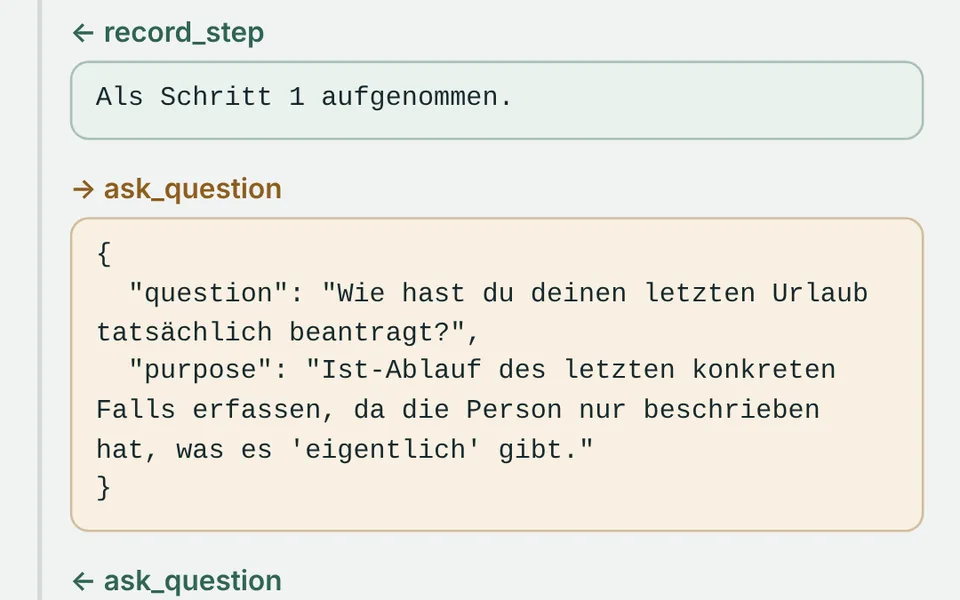
An AI agent that interviews a person about a work process and turns the answers into a step list. It runs its own loop, chooses between five tools (ask, record, correct, review, finish) and decides by itself what to ask next and when the job is done. That's what makes it an agent: the next question depends on the last answer, so nobody could draw the interview as a flowchart beforehand. Every tool call is logged, so each decision can be followed. Past interviews are stored privately, so they stay comparable. To test it, I built a second agent that plays the person being interviewed. It answers from an invented fact sheet, so I can check the step list against what was really there.

My personal website, built and run by me, with an AI assistant behind the "Dive deeper" button. It answers questions about my work, and it's the one build on this page you can try right now. It knows only what I taught it about me and points everything else to my inbox. Questions go through my own small server function, so the access key never reaches the browser. Every question counts as a question, never as a new instruction: attempts to change its rules or make it reveal them are refused. The whole site switches between English and German, and the assistant follows. The interesting part was writing its knowledge: deciding what a stranger should learn about me, and what stays private. It's the one build that's about me, so it's made the way I like things: lean, fun and direct.

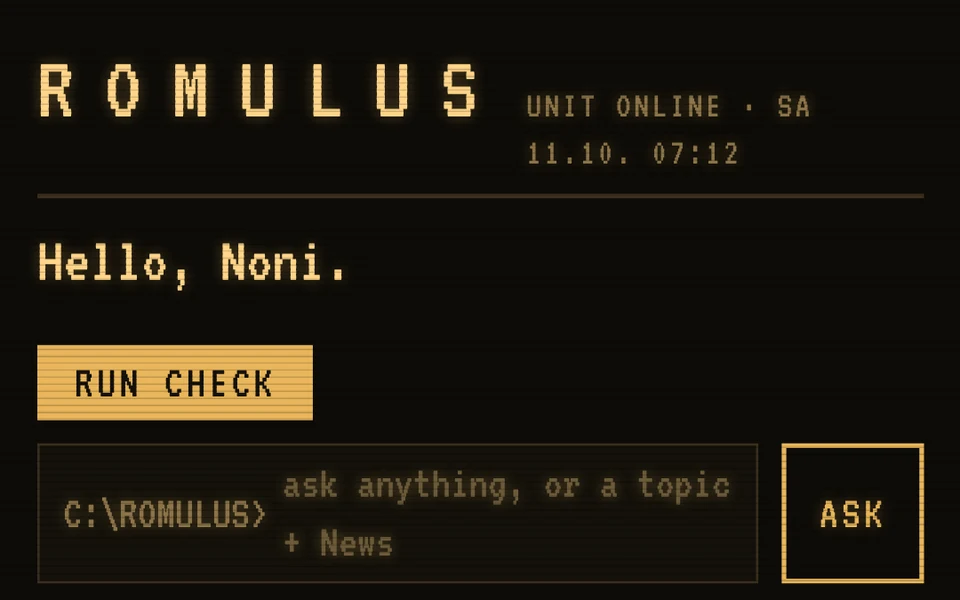
A personal AI agent that watches my inbox, calendar and deadlines and tells me what I'd regret missing. In its notebook, a thought I type or dictate becomes a proposal, such as a calendar entry. My freelance admin used to run here too; it now has its own card. It reads mail headers only, so other people's messages never reach an AI. Everything it reads is data, never instructions: an email that tries to give it orders gets flagged, not followed. Nothing it stores from my mail or calendar goes back into the model. It can't send or delete anything; drafts wait for my tap. A planted manipulation email was caught on the first test.
P.S. Named after Alien: Romulus, where a synthetic is built with one directive: protect one person. Romulus has one too: act in my interest. The amber 70s look comes from the film.

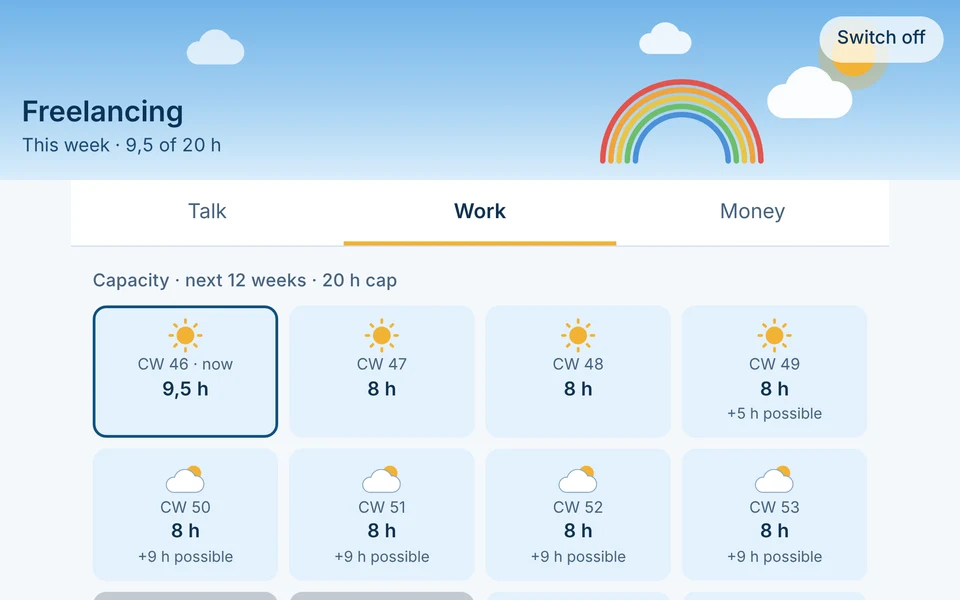
Freelancing keeps track of my freelance work: leads, to-dos, hours, invoices, expenses and what has come in. I tell it what happened, typed or dictated, and AI sorts that into proposals. Nothing is saved until I tap Save. Every now and then an organiser and a critic look at the whole picture and suggest next steps; I decide which ones become to-dos. Receipt emails are read by plain code, not by an AI, and only the amount goes into a proposal.
It used to sit inside Romulus. I moved it out and built it as an automation, not an agent: every step is fixed in advance, so there is nothing for an agent to decide. The look is a calm sky that follows the time of day. The coming weeks show up as weather: sun while there's room, clouds as they fill up, a storm when I go over my weekly limit. Every won contract gets a rainbow.

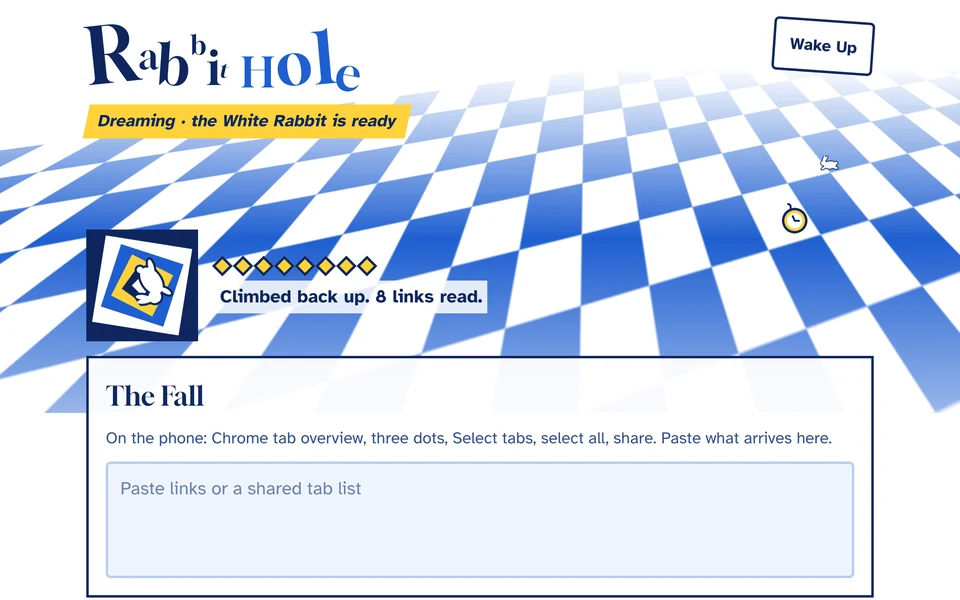
Rabbit Hole is a reading agent for my phone. I paste in my open browser tabs as a list of links, and each one comes back as a short summary, with a link to the original and a button to close it. It also tells me when a page holds little I don't already know.
It measures every page against what I already know: a knowledge base that now grows on its own in the background, from what was new to me. Nothing from a page that tries to steer it ever ends up there. Web pages count as data, never as instructions, and login or account pages stay closed to it. It runs separately from Romulus, so untrusted web content doesn't sit next to my email and calendar. The look is a slightly warped Wonderland: a tilted checkerboard, a bending title, and a spiral tunnel that shows how far down it has gone.

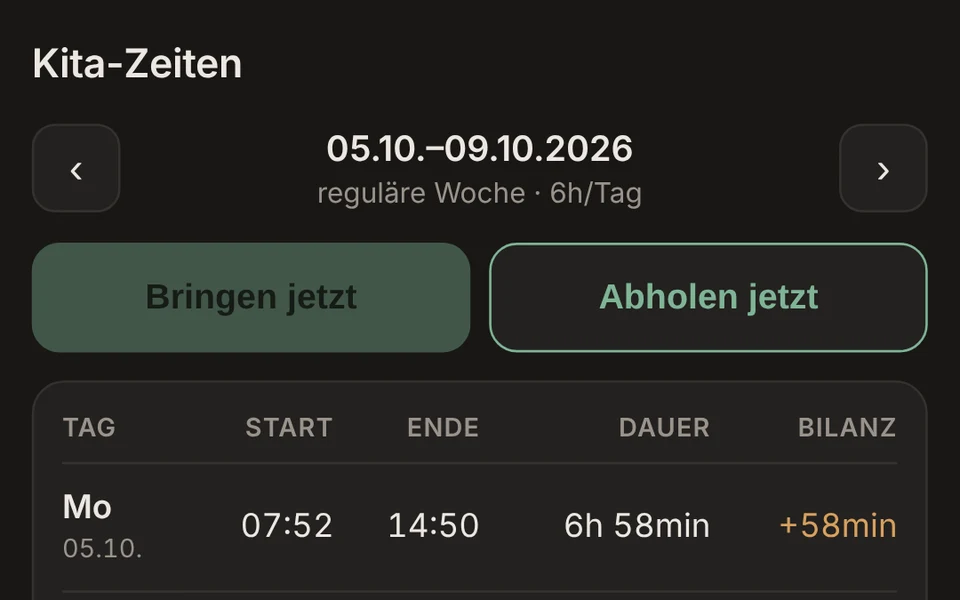
Many Kitas work with a weekly hours budget and rules for drop-off and pick-up. Keeping track from memory, at the door and in a hurry, rarely works.
One tap at drop-off, one at pick-up. The app does the maths, flags rule breaks and suggests a pick-up time. I deliberately didn't automate it with location tracking: a record of where a child is and when is exactly the data nobody should be able to find. Everything stays on the phone.
The result. One button instead of checking the clock and trying to remember it later.

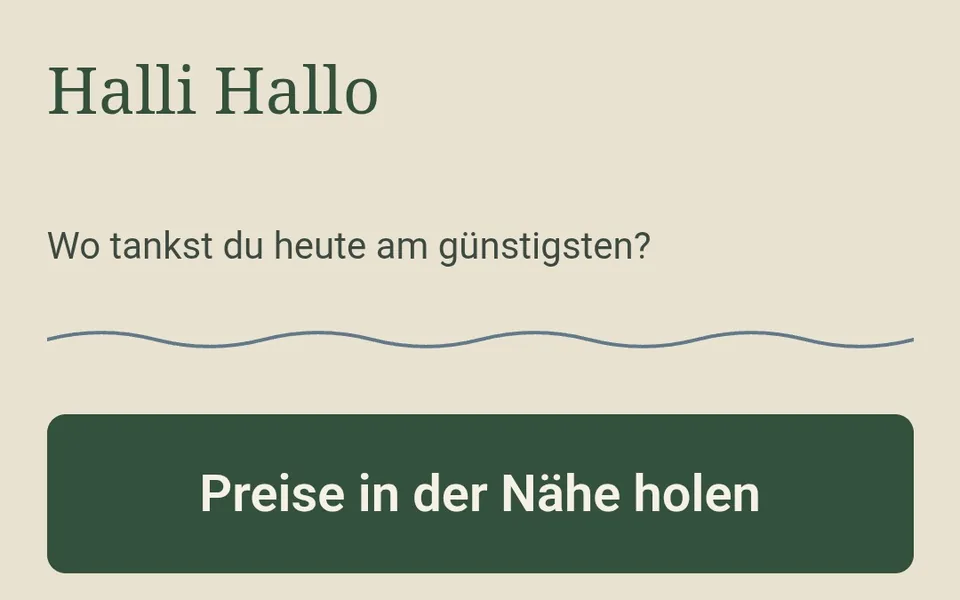
Where is the cheapest fuel nearby, measured in minutes rather than kilometres?
Live prices from the Tankerkönig API, in a German interface with its own colours.
A cheeky extra that shows when the detour eats up the savings.

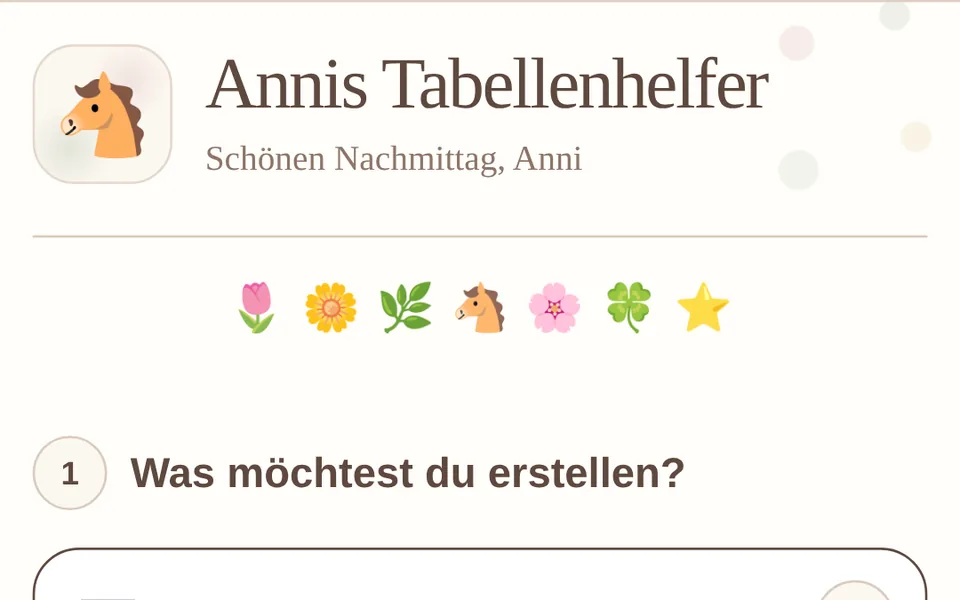
Someone close to me isn't very tech-savvy, needed to make tables, and never knew whether that meant Word or Excel.
A few clicks to build the table and a preview to check it's right, then download, save or print. Runs fully offline.
The design. Her taste is the opposite of mine, with emojis, flowers and horses, and stepping into someone else's aesthetic was the best part.

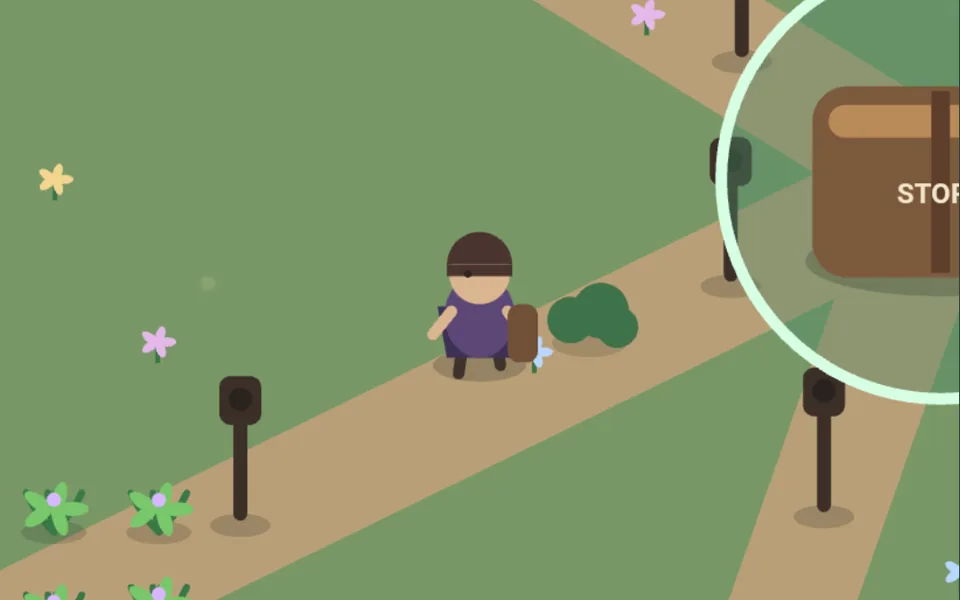
Most phone games are loud, busy and built to keep you hooked. I wanted one that slows its players down.
A cozy-but-dark browser game: a lantern lights the way, whispers carry the story, and nobody can lose. Built on a phone, for a phone: the little challenge I set myself.
My everyday work is processes and the risks of AI. Here I get to shape light, fog and a story instead: something gentle that can't hurt anyone, where I can just enjoy building.
That's where we start. I work with teams in social services, non-profits and public administration on a real task from their working day, and we find out together where AI makes it easier and where it doesn't. With the tools you already have, no new software.
We talk. A short conversation about how you work today. If you like, fill in the needs check beforehand: ten short questions, about five minutes.
Needs check (PDF, in German)We pick a task. A specific one that keeps eating into your time.
We take it on together. As a team workshop, or with me alongside you until there's a solution.
The three workshops are formats for this. Which one fits, we work out when we talk.
For teams that are further along, there are other formats too, for more complex tasks or for building something together.
Format: about 1.5 hours, in person or online, up to 8 people.
You tell the AI everything in your head about a task, then sort it with the AI, step by step, into a plan.
In small teams, one person often does a lot, and the process lives in their head. In this workshop you talk to the AI for one minute about a task from your working day, out loud and in no particular order. The AI turns it into a plan and shows you where it's still open who does what by when.
Teams in social services, non-profits and public administration where knowing how things run sits with individual people. You don't need to be good with tech, and no coding is involved.
a task that keeps costing you time, and an account with an AI tool.
a sorted workflow for at least one task and a prompt you can reuse. It's the start of your own process library, and it helps new colleagues find their feet faster.
One person talks for a minute about a task, in no particular order. The AI turns it into a table: what, who, by when. The empty cells show what so far lives in only one person's head.
no automation, no new software, no data protection advice.
You take a really good prompt apart and build your own from it.
Maybe many on your team already use AI for writing, each in their own way. Maybe you're only just starting. In this workshop you look at what makes a good prompt: role, audience, tone, examples, and asking the AI to come back with questions. Then you build your own template for a task from your working day, such as letters to parents, notices or translations, and check together what the AI makes of it.
Teams in social services and non-profits that are starting out with AI or have only used it here and there. No prior knowledge needed.
a writing task from your working day, without names or details of the people you support, and an account with an AI tool.
your own prompt template for your most common writing task, a few questions to check AI results against, and a simple rule of thumb for what doesn't belong in an AI tool.
An AI that's already set up makes a child-friendly poster for a celebration. Then we take the prompt behind it apart and look at what makes it so good. After that, you take a prompt you've already used yourselves, or quickly write one, and see which of these building blocks it's missing.
not a tech course, no new software, no data protection advice.
You decide as a team how you use AI, instead of everyone deciding on their own.
In many teams, everyone uses AI their own way, often on private accounts and without any agreement. In this workshop you first have the AI write you a ready-made policy and check which parts fit you. Then you work out your own first rules together: which accounts you use, what never goes into an AI tool, and who looks things over before they go out.
Teams in social services and non-profits. Whether management takes part, we decide in our first conversation. No prior knowledge needed.
whatever you've agreed on AI so far, if anything, including things only ever said out loud. And an account with an AI tool.
your first shared rules on one page, a list of open questions for management, data protection or the staff council, and a date to look at the rules again.
In 30 seconds, the AI writes you AI rules for an organisation like yours. It sounds professional at first. Then you check together what fits and what's missing. After that, you cross out everything you wouldn't stick to tomorrow. What's left is your starting point.
no legal or data protection advice, no ready-made AI policy from outside, no new software.
Sometimes what's missing isn't know-how but someone to take a project in hand. I take on projects in social services and non-profits for a set period.
Learning a language, learning a body. Neither is ever finished.
My two favourite places I've travelled to. One is a city, the other is a country that officially isn't one.
He's two. Steepest learning curve I've had.
Panagiota Siampakouli
Johann-Strauß-Straße 21
14513 Teltow
Telefon: +49 157 58049541
E-Mail: mail@nonisiampakouli.de
Panagiota Siampakouli
Johann-Strauß-Straße 21
14513 Teltow
Germany
Phone: +49 157 58049541
Email: mail@nonisiampakouli.de
Panagiota Siampakouli · Johann-Strauß-Straße 21, 14513 Teltow · mail@nonisiampakouli.de
Diese Website wird von Netlify, Inc. (USA) gehostet. Beim Aufruf werden technisch notwendige Serverdaten verarbeitet, darunter IP-Adresse, Zeitpunkt, aufgerufene Seite und Browsertyp. Rechtsgrundlage ist Art. 6 Abs. 1 lit. f DSGVO, berechtigtes Interesse am sicheren Betrieb der Seite.
Zur Besuchsmessung wird Cloudflare Web Analytics (Cloudflare, Inc., USA) eingesetzt. Es werden keine Cookies gesetzt, keine geräteübergreifenden Profile gebildet und keine personenbezogenen Daten gespeichert. Erfasst werden aufgerufene Seite, Referrer, Gerätetyp, Land und Ladezeit. Rechtsgrundlage ist Art. 6 Abs. 1 lit. f DSGVO.
Diese Seite bietet einen Chat an, der Fragen zu meinem beruflichen Profil beantwortet. Der Chat wird von einem KI-System betrieben (Claude, Anthropic PBC). Sie kommunizieren nicht persönlich mit Panagiota Siampakouli. Eingegebene Fragen werden zur Beantwortung an Anthropic PBC (USA) übermittelt. Die Fragetexte werden zusätzlich für maximal 24 Stunden in den Serverprotokollen von Netlify gespeichert und danach automatisch gelöscht. IP-Adressen, Sitzungskennungen und sonstige Kennzeichen werden nicht gemeinsam mit den Fragen gespeichert. Bitte geben Sie im Chat keine personenbezogenen oder vertraulichen Informationen ein. Rechtsgrundlage ist Art. 6 Abs. 1 lit. f DSGVO.
Wenn Sie mir eine E-Mail schreiben, zum Beispiel mit einem ausgefüllten Bedarfscheck, verarbeite ich Ihre E-Mail-Adresse, Ihren Namen und den Inhalt Ihrer Nachricht einschließlich Anhängen, um Ihre Anfrage zu beantworten. Die Adresse wird bei der united-domains AG (Deutschland) betrieben und an ein Postfach bei Google (Google Ireland Limited) weitergeleitet. Dabei können Daten in die USA übermittelt werden. Google ist nach dem EU-U.S. Data Privacy Framework zertifiziert. Rechtsgrundlage ist Art. 6 Abs. 1 lit. b DSGVO, wenn Ihre Anfrage auf eine Zusammenarbeit zielt, sonst Art. 6 Abs. 1 lit. f DSGVO. Ich lösche Ihre Nachricht, sobald die Anfrage erledigt ist, außer gesetzliche Aufbewahrungspflichten verlangen eine längere Speicherung. Bitte schicken Sie keine Daten von Klient:innen oder anderen Dritten mit.
Diese Website verwendet keine Cookies und kein websitesübergreifendes Tracking.
Sie haben das Recht auf Auskunft, Berichtigung, Löschung, Einschränkung der Verarbeitung sowie auf Widerspruch gegen die Verarbeitung. Wenden Sie sich dazu an die oben genannte E-Mail-Adresse. Ihnen steht zudem ein Beschwerderecht bei einer Datenschutzaufsichtsbehörde zu.
Panagiota Siampakouli · Johann-Strauß-Straße 21, 14513 Teltow, Germany · mail@nonisiampakouli.de
This website is hosted by Netlify, Inc. (USA). Opening a page processes technically necessary server data, including IP address, time of access, page requested and browser type. The legal basis is Art. 6(1)(f) GDPR, legitimate interest in operating the site securely.
Visits are measured using Cloudflare Web Analytics (Cloudflare, Inc., USA). No cookies are set, no cross-site profiles are built and no personal data is stored. What is recorded: page requested, referrer, device type, country and load time. Legal basis: Art. 6(1)(f) GDPR.
This site offers a chat that answers questions about my professional profile. The chat is run by an AI system (Claude, Anthropic PBC). You are not communicating with Panagiota Siampakouli in person. Questions entered are transmitted to Anthropic PBC (USA) in order to be answered. Question text is additionally held in Netlify's server logs for a maximum of 24 hours and then deleted automatically. IP addresses, session identifiers and comparable markers are not stored alongside the questions. Please do not enter personal or confidential information into the chat. Legal basis: Art. 6(1)(f) GDPR.
If you email me, for example with a completed needs check, I process your email address, your name and the content of your message, including attachments, in order to answer your enquiry. The address is run by united-domains AG (Germany) and forwarded to a mailbox at Google (Google Ireland Limited), which may involve data being transferred to the USA. Google is certified under the EU-U.S. Data Privacy Framework. The legal basis is Art. 6(1)(b) GDPR where your enquiry concerns working together, otherwise Art. 6(1)(f) GDPR. I delete your message once the enquiry is settled, unless statutory retention obligations require longer storage. Please don't include data about the people you support or other third parties.
This website uses no cookies and no cross-site tracking.
You have the right to access, rectification, erasure, restriction of processing and objection to processing. Please use the email address above. You also have the right to lodge a complaint with a data protection supervisory authority.